Can you keep your PMS and hand off the trust accounting?
Yes. Here is how it works for Australian short-stay managers on Hostaway, Guesty, Resly or HomHero: what moves to an outside team, what the law keeps with you, and how to hand it over without a messy month.

Written by Joshua Freeman
Co-Founder, PropertyStack · · 10 min read
Contents
Your bookkeeper has given notice. Or she hasn't, but she is the only person who knows how month end works, and you both know it. Meanwhile the idea of changing your booking software makes you tired. You have done it before, and you remember it.
Here is the good news. The two things are separate. You can keep the property management system (PMS) you run today and hand the trust accounting to someone else. That is the whole idea behind our trust accounting service for short-term rental managers, and other firms offer versions of it too. This page explains how it works, and where the limits are.
What actually moves to an outside team?
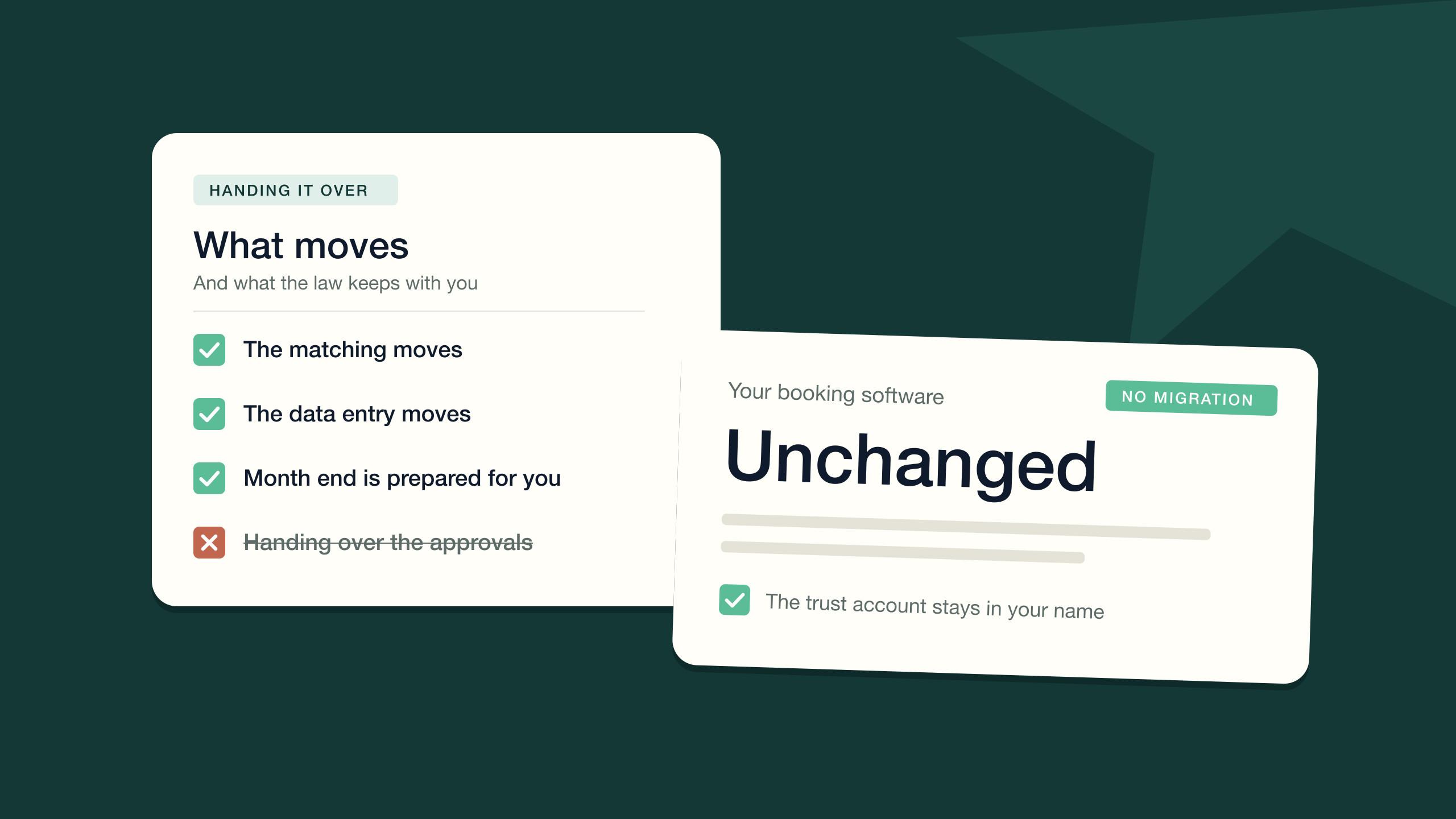
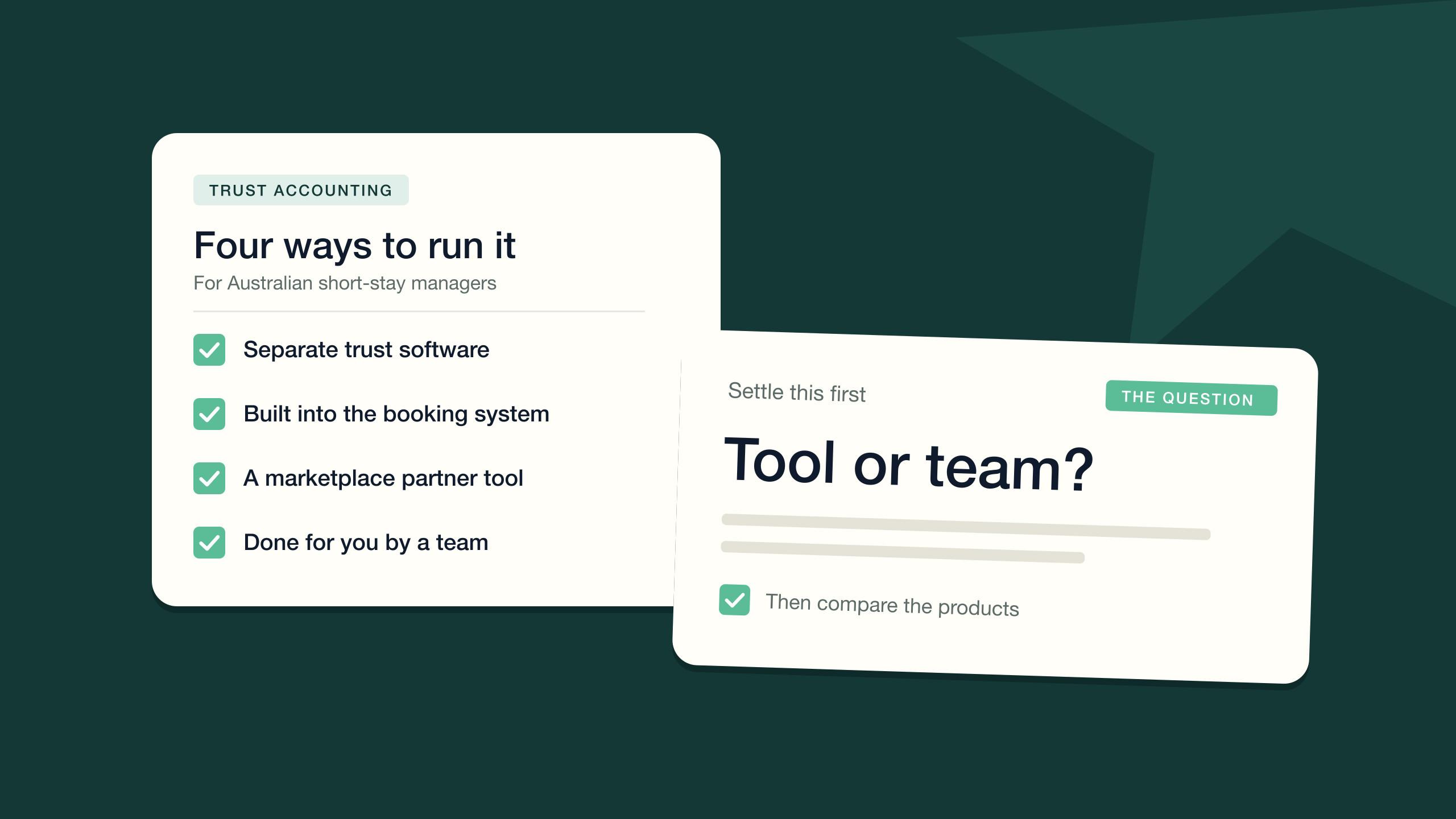
Trust accounting is three kinds of work. Only one of them needs to be you.
- The matching. Every line on the bank statement is tied to a booking, an owner or a bill. This is most of the hours. It can move.
- The data entry. Cleaning, linen, maintenance and supplier invoices are entered against the right owner and property. It can move.
- The decisions. Approving payments, signing off the month, answering to the regulator and the auditor. This stays with you.
A good service takes the first two completely and prepares the third so that your part is a review.
What the law keeps with you
Handing over the work does not hand over the duty. The regulators are plain about who holds it.
In Queensland, the Office of Fair Trading's page on opening a trust account says only the principal licensee can operate the account. Its page on handling trust money says withdrawals need the client's written authority and that all payments go directly from the trust account.
In New South Wales, the government's page on real estate trust accounts says each trust account has one licensee in charge, who "is unable to delegate their authority to another person". The same page says it is the licensee's responsibility to make sure the audit is lodged on time.
So the shape of any sound arrangement is the same in both states: they prepare, you approve. An outside team that asks for the power to release money on its own is asking for something you cannot give. Requirements vary by state and territory, so check your own regulator's pages. We set out the two largest in trust account rules for short-term rentals in Queensland and trust account rules for holiday rentals in New South Wales.
How it works in practice: one payout, start to finish
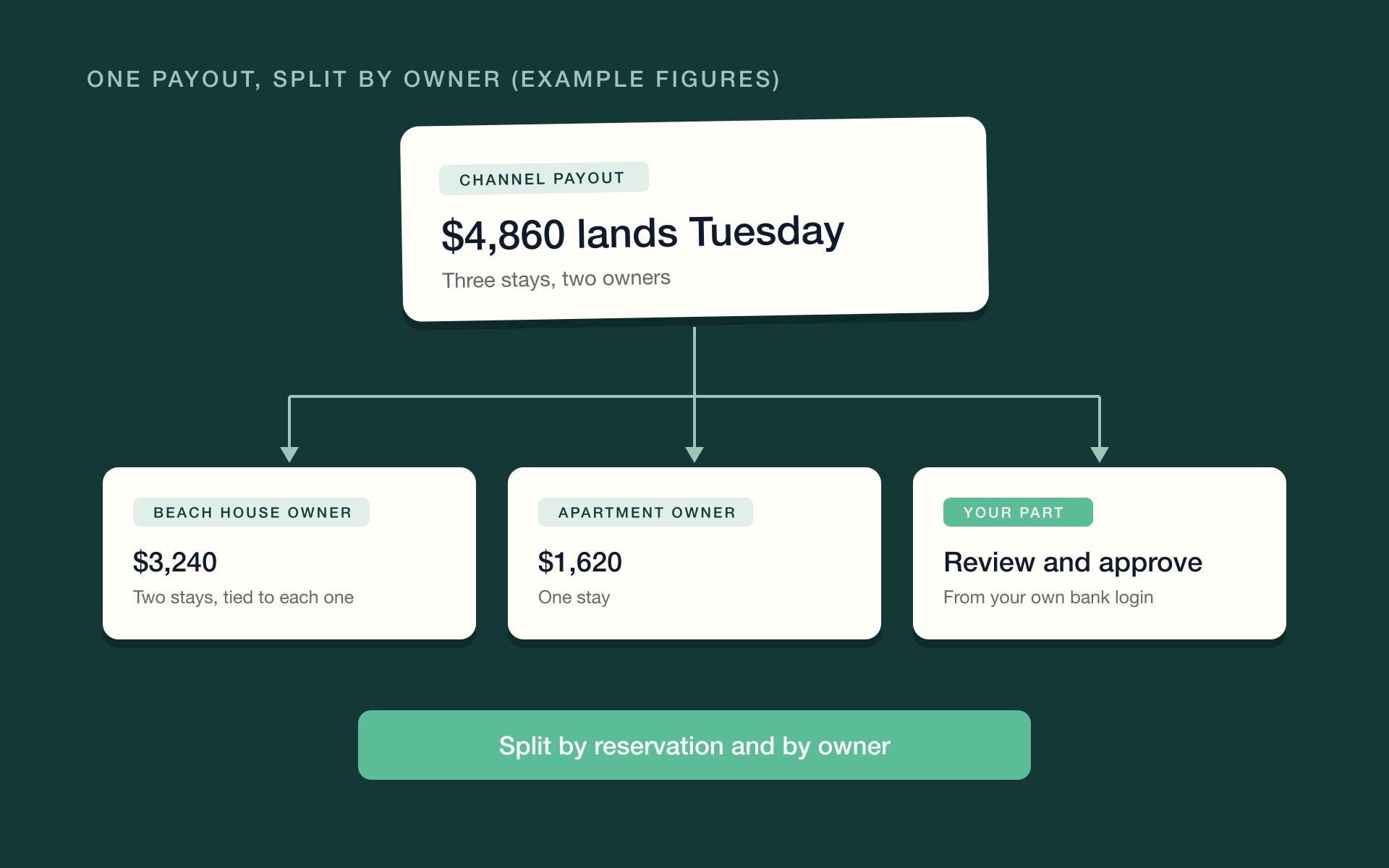
An example, with round made-up figures. On a Tuesday a channel payout of $4,860 lands in your trust account. Your booking system shows it covers three stays: two at a beach house owned by one family, one at an apartment owned by another.
- Tuesday. The outside team sees the payout on the bank feed. They split it: $3,240 to the beach house owner's ledger, $1,620 to the apartment owner's ledger, each tied to its reservation.
- Wednesday. Two cleaning invoices and a plumber's bill arrive. The team enters each against the right property. Nothing touches your desk.
- Through the month. Every business day, the bank is matched. A refund that reverses part of one stay is recorded against the same reservation it came from.
- Month end. The team prepares the reconciliation, each owner's statement, your management fees and the list of payments to make.
- Your part. You read the summary, open anything that looks odd, and approve the payments from your own bank login.
Compare that with how one operator described her month to us: a pile of receipts on the desk, and "double, triple handling" to get them into the accounts, off to the trust accountant and off to the bookkeeper.
Does it work with my booking system?
The honest answer depends on how your system treats trust accounting today. These notes use each vendor's own description, as of November 2026.
If you are on Hostaway
Hostaway says it handles trust accounting through partners, and its marketplace lists several, some of which are software and some services. So Hostaway users already run trust accounting outside the booking system. Handing it to a team is a small step: the booking data stays in Hostaway and the team works from it.
If you are on Guesty
Guesty launched its own trust accounting for Australia and New Zealand in March 2026, listed on its pricing page as an add-on. You can run that module yourself. Or you can keep Guesty for bookings and have a team do the trust work beside it. The question to settle first is which system holds the trust ledger, so there is only one.
If you are on Resly or HomHero
Resly says its trust accounting is integrated into the platform, and HomHero describes trust accounting through an integration with RMS Cloud plus its own trust account management services. On these systems the ledger already lives inside the software. If the software is fine and the hours are the problem, ask whether a team can do the work inside your existing system. HomHero says it offers that itself.
If you would rather have one system that does the work
Ours, so weigh it as our account. PropertyStack is a booking system with trust accounting built in. Its AI accounting agent reconciles the bank lines and pulls contractor bills into payables, so the two slowest jobs are done for you. That means changing your booking system, which is a job for the quiet months. We set it beside the other systems in trust accounting options compared.
If you use a separate trust tool
BookingTrust says you can run its software yourself or have its team manage it. If you already use it, that is one route. Another is a service that brings its own ledger and works from your booking system's data. We compare the routes in BookingTrust alternatives for Australian short-stay managers.
Is this just hiring another bookkeeper?
No, and the difference matters when someone leaves. A bookkeeper is one person with one method in her head. When she takes leave, the month waits. When she resigns, the method goes with her. A service is a team working to a written routine, every business day, with more than one person who knows your books.
It also changes what you manage. With a bookkeeper you manage a person: hours, cover, training, checking. With a service you manage a result: is the bank matched today, and is the month ready on the agreed date? Your own team gets its time back for owners and guests, and you can take on more properties without adding another hire to the back office.
The mistakes operators make when they hand over
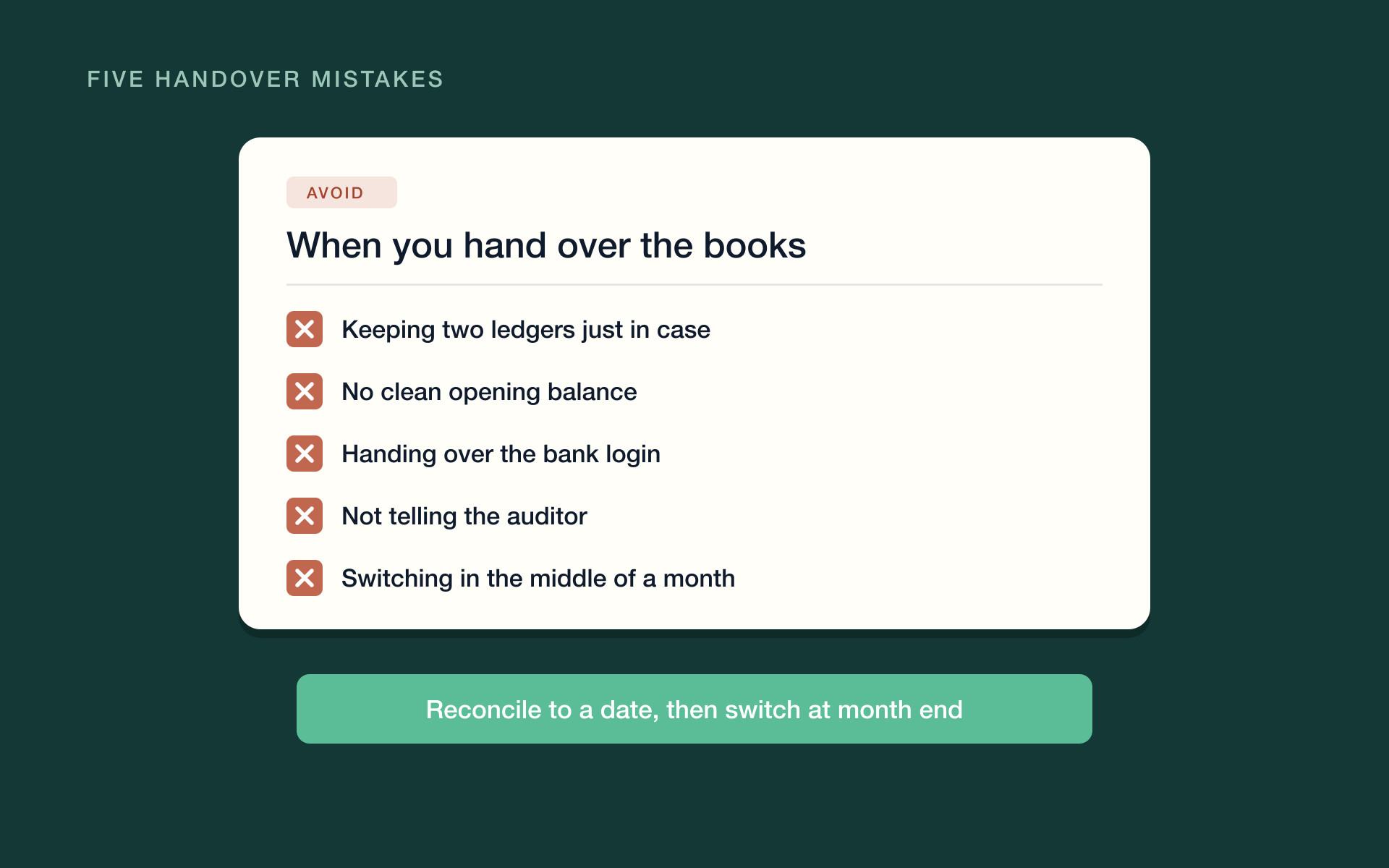
- Two ledgers. The old system and the new team both keep trust records "just in case". They drift apart. Pick one source and close the other.
- No clean opening balance. If the books do not balance on the day you hand over, the team inherits the problem and so do you. Reconcile to a date, then switch.
- Handing over the bank login. Give read access to the feed. Keep the authority to pay.
- Not telling the auditor. Your auditor will ask who did the work and how. Tell them before the change, not at audit time.
- Switching mid-month. Change at a month boundary so each statement comes from one method.
What to ask a trust accounting service before you sign
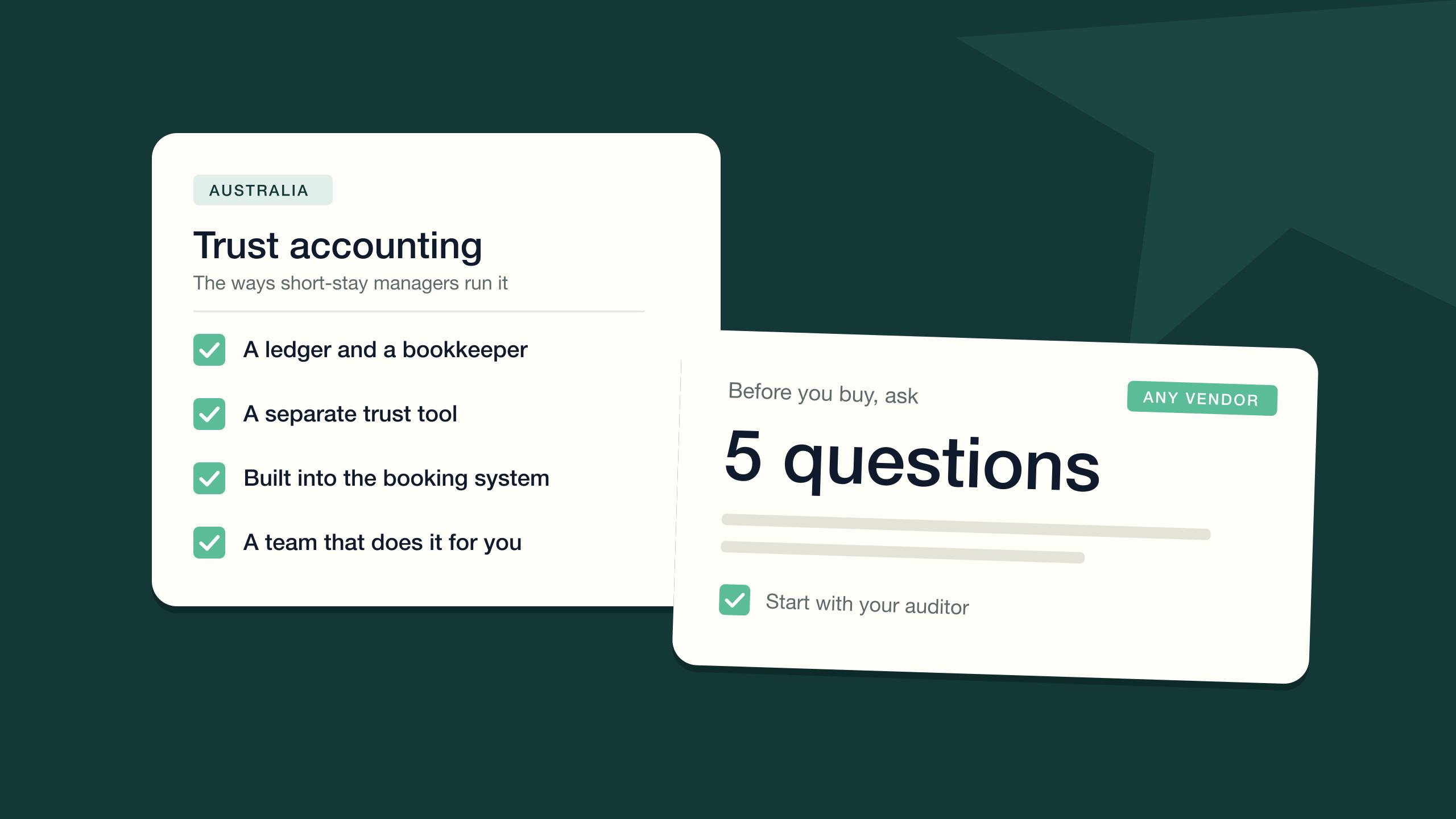
- Who does the work, and where are they?
- Do you reconcile every business day, or only at month end?
- When will end of month be ready for me to review?
- Which system holds the trust ledger, and can I export it if I leave?
- Can I speak to a current customer on the same booking system as me?
- What do you need from my auditor, and what will you give them?
How PropertyStack's finance package answers those
It is our service, so take this as our account. Our team reconciles your trust account every business day, enters the bills and invoices, and prepares end of month by the fifth business day. You review it and press pay. It works with the booking system you already use, in Australia and New Zealand.
It takes 98% of the finance work off your desk. That figure is measured. And it comes from people who have sat where you sit: we ran the trust account for our own short-stay business, Urban Shore, as it grew to 380+ properties, before we built anything to sell.
It is the wrong fit if you manage fewer than about five properties, if you do not hold owners' money, or if you have a trust accountant on staff who wants to keep the work. In those cases, keep what you have. Otherwise, ask us for a reference call with a current customer and hear how the handover went for them.
Frequently asked questions
The short version, for the questions operators ask most.
Yes. Hostaway handles trust accounting through partners, so the trust work already sits outside the booking system. A service can work from your Hostaway booking data, reconcile your trust account and prepare end of month while you approve the payments.
Yes. PropertyStack's finance package is built to work beside the booking system you already use. The team reconciles daily, enters bills and prepares end of month. You keep your software, your bank account and the approval of every payment.
A done-for-you trust accounting service can take over the daily reconciliation, bill entry and month-end preparation. Reconcile the books to a clear date first, tell your auditor, and hand over at a month boundary so each owner statement comes from one method.
Yes. The licensee remains responsible. In NSW the licensee in charge cannot delegate the authority to withdraw trust money, and in Queensland only the principal licensee can operate the account. The outside team prepares the work and you approve it.
Give read access to the bank feed so they can reconcile. Keep the authority to release payments yourself. A service that needs to move trust money without your approval is asking for something the rules do not let you hand over.
At the start of a month, with the previous month fully reconciled. Because no booking software changes, it can be done in peak season.
Still have questions?
Ask PropertyStackKeep reading
Money & accounting
Trust accounting for short-term rentals in Australia: software and done-for-you options compared
· 12 min read
 Joshua Freeman
Money & accounting
BookingTrust alternatives for Australian short-stay managers
· 11 min read
Joshua Freeman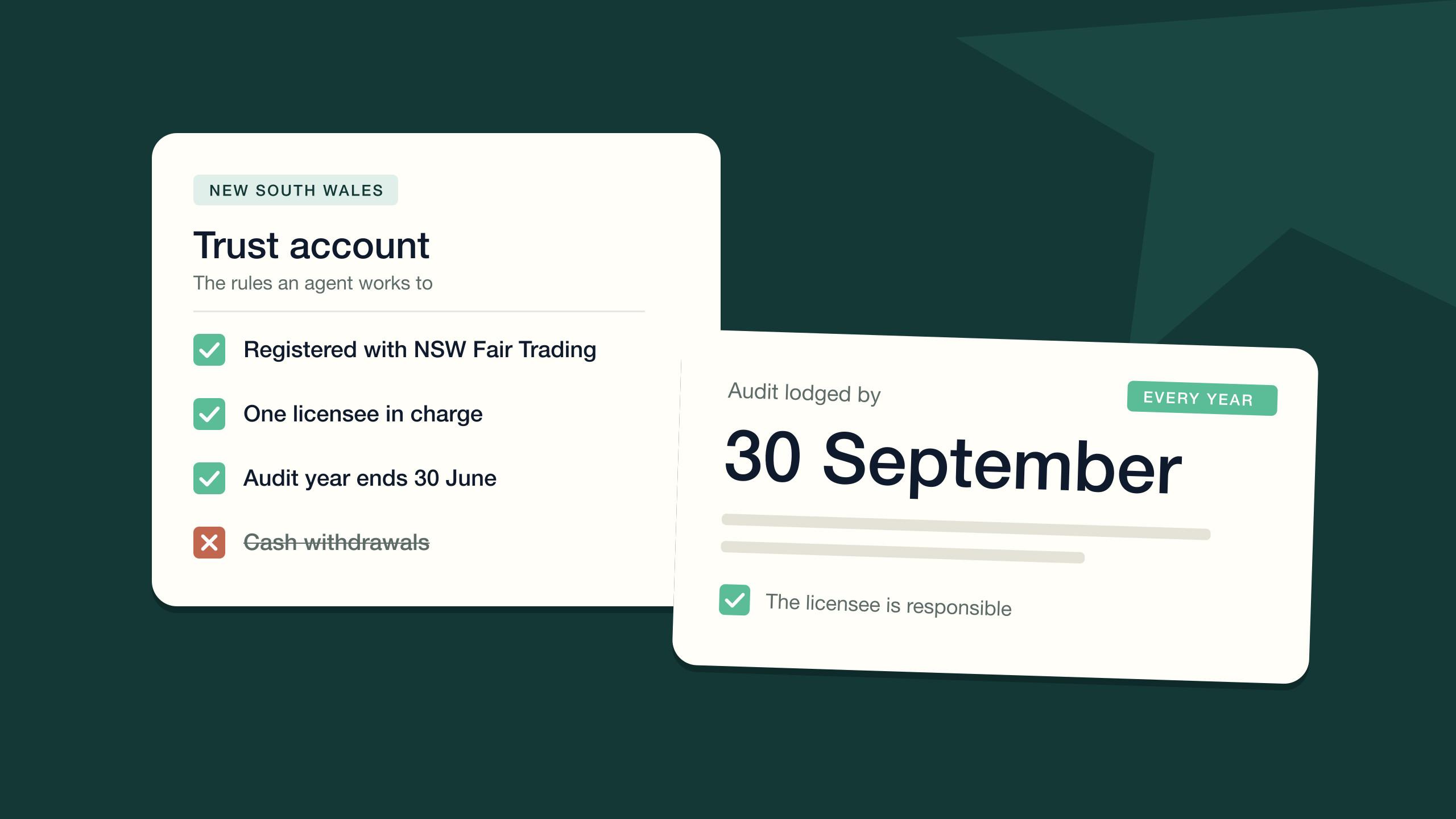
Money & accounting
Trust account rules for holiday rentals in New South Wales
· 11 min read
Joshua FreemanSee it on your own listing. Free, from one link.
Paste an Airbnb listing and we'll show you what it could look like — a rewritten title, description, photos and a task list from your reviews.
- Syncs with every channel
- Cancel anytime
- AI agents with Pro