Airbnb host fees: the 15.5% single fee and how to reprice for it
Airbnb is moving every home host to one service fee, and most now pay 15.5%. Here is how the fee works, the multiplier that keeps your payout whole, and what it changes on owner statements.

Ryan J
Co-Founder, PropertyStack · · 12 min read
Contents
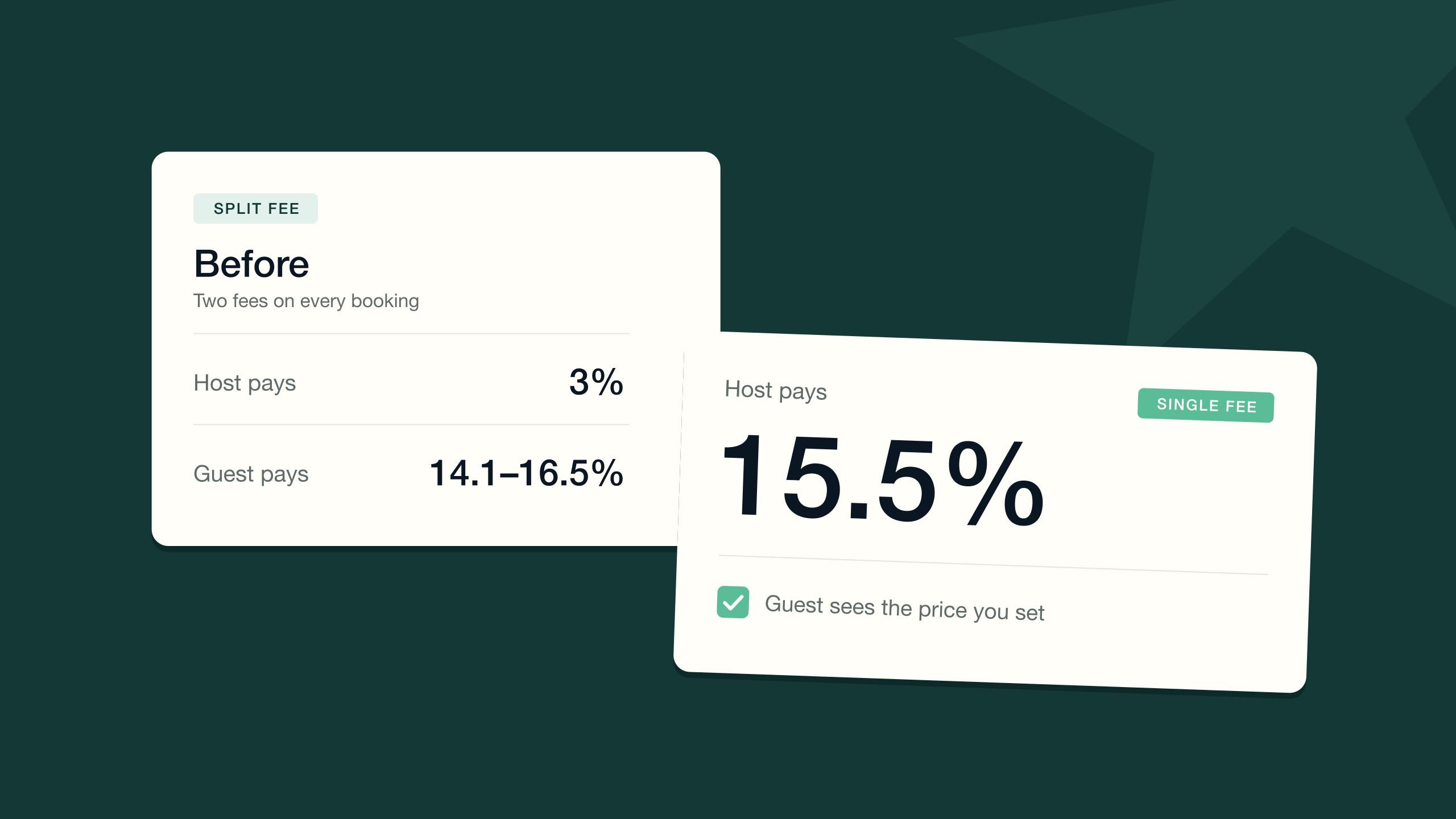
Airbnb host fees used to be two numbers. Most hosts paid 3%, and the guest paid a separate service fee on top. Airbnb is now moving every home host to one fee, taken entirely from the host's payout. For most hosts, that fee is 15.5%.
If you manage listings through property management software, you are already on it. Airbnb's announcement says software-connected hosts who had not yet switched were moved on October 13, 2026. A price that was never adjusted now pays out less: in Airbnb's own example, a $100 price that used to earn $97 earns $84.50.
This guide covers how the single fee works, the multiplier that keeps your payout whole, where repricing goes wrong, and the part most fee explainers skip — what a bigger fee line does to owner statements and management commission. The fee facts come from Airbnb's own pages as of November 2026: Airbnb's announcement of the single service fee and its service fees help article. Airbnb says it can change its fees at any time, so check the live pages before you reprice.
What are Airbnb host fees now?
Airbnb charges a service fee on every confirmed booking. For stays there are two fee structures, and one of them is on the way out.
| Question | Split fee (being phased out) | Single fee |
|---|---|---|
| Who pays Airbnb's fee? | Host and guest | The host only |
| What does the host pay? | 3% for most hosts | 15.5% for most hosts |
| What does the guest pay? | A service fee of 14.1% to 16.5% | No separate service fee |
| What price does the guest see? | Your price plus Airbnb's fee | Your price |
Three details in the fine print matter.
- Not every host pays exactly 15.5%. Airbnb says most hosts on the single fee pay 15.5%, remaining hosts typically pay 14% to 16%, and a higher rate applies to listings in a small number of countries. Your own rate is on each transaction in your earnings.
- The fee covers more than the nightly rate. Airbnb calculates it on the nightly price plus any fees the host adds, such as cleaning, pet or extra-guest fees. Taxes are excluded.
- It applies to new bookings only, and it is one-way. Reservations booked before an account switched keep the old structure, even if the stay happens later. Once an account is on the single fee, it cannot switch back.
The single fee is mandatory for most hosts. Airbnb names three groups specifically: traditional hospitality listings such as hotels and serviced apartments, hosts who use property management software, and hosts in countries where the structure already applies. Everyone else is being migrated. Airbnb's help center says the split fee will no longer be available once that is done.
Why did Airbnb move to a single host fee?
Airbnb's stated reason is pricing clarity. Under the split fee, a host set one price and the guest saw a higher one, because the guest's service fee was added on top. Airbnb says many hosts found that made pricing difficult. With one fee, the price you set is the price the guest sees.
Its announcement also explains where the number comes from: the 15.5% rate is based on Airbnb's global average service fees. In other words, the fee was not designed to change what a typical booking costs the guest. It moves the whole fee onto one side of the transaction — yours — and leaves you to set a price that already includes it.
That is the real change. The fee used to be Airbnb's line on the guest's checkout page. Now it is part of your price, your payout math and your owner statements.
How much does Airbnb take from hosts?
Airbnb's own worked example shows all three outcomes side by side.
| Scenario | You set | Guest sees | You earn |
|---|---|---|---|
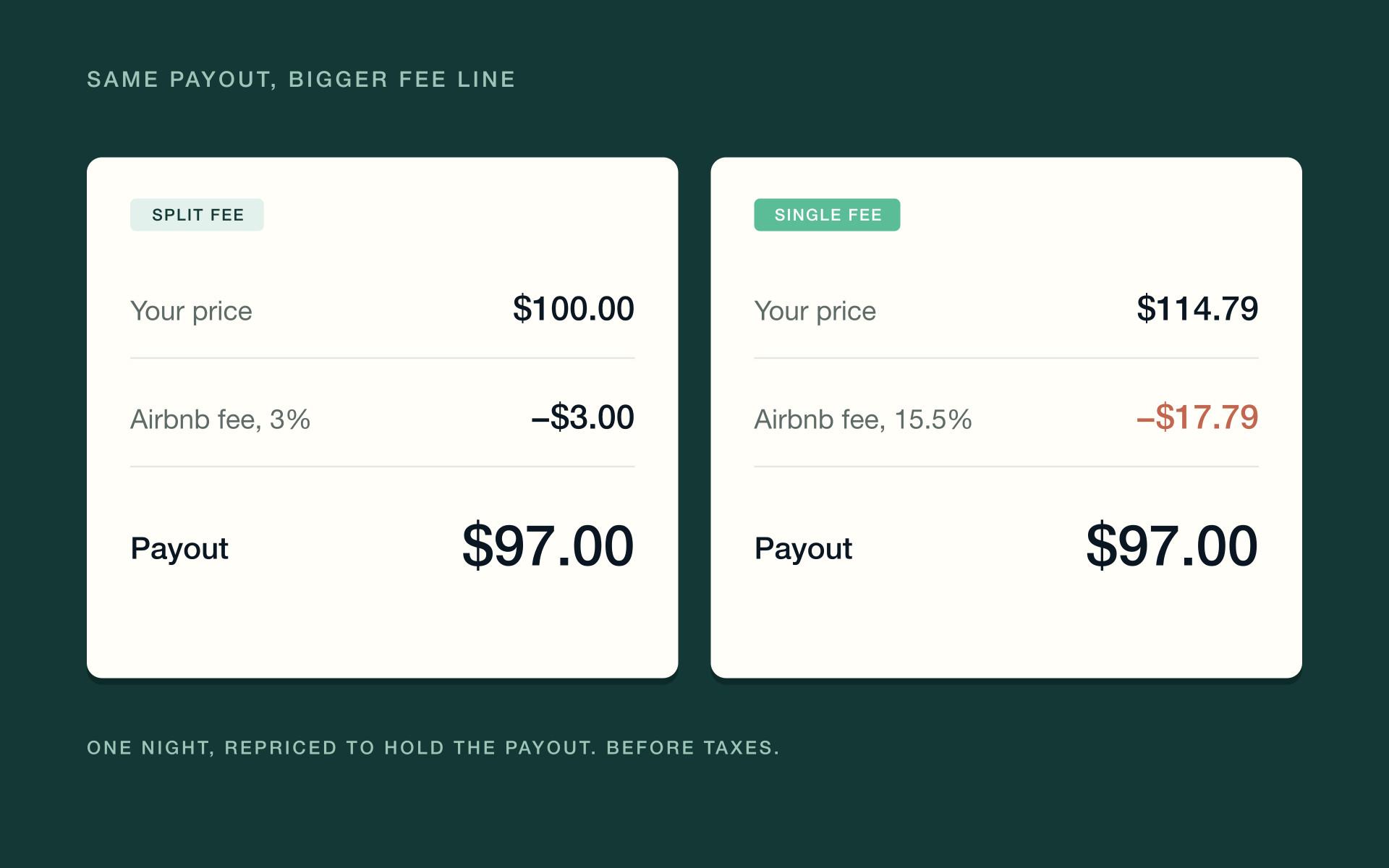
| Split fee | $100 | $115 | $97 |
| Single fee, price adjusted | $115 | $115 | $97 |
| Single fee, price left alone | $100 | $100 | $84.50 |
Read the bottom row twice. A host who changed nothing kept the same listed price, showed guests a lower total than before, and gave up $12.50 of payout on every $100. That is the default outcome of the switch. Airbnb's announcement says as much: hosts who did not adjust by the deadline now have lower prices and lower payouts per night.
The middle row is the target. Raise the price so the fee is inside it, and both you and the guest end up where you started.
How do you reprice for the 15.5% host-only fee?
Start by deciding what you are protecting. There are two sensible targets, and they use different math.
To keep the payout you had under the split fee
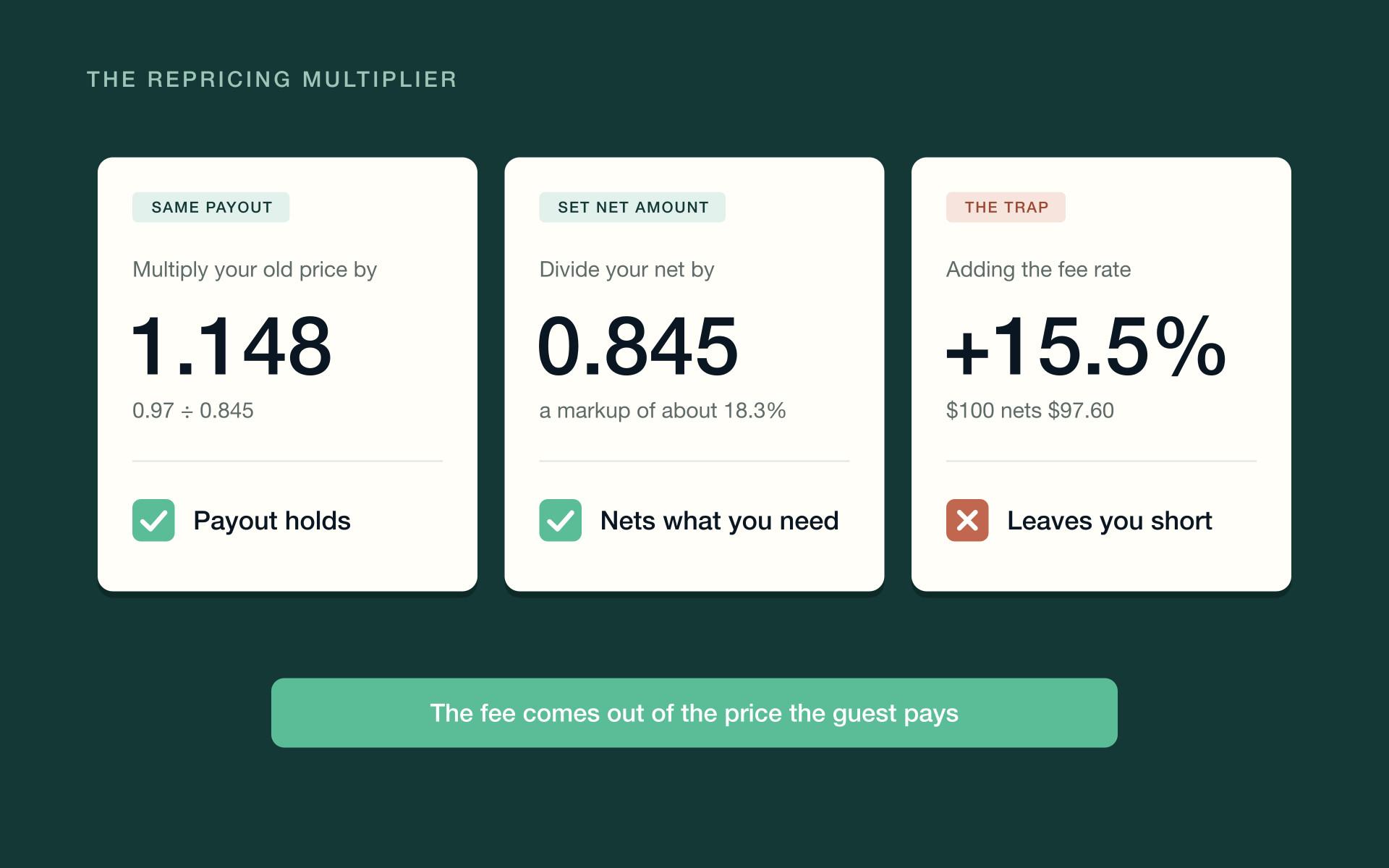
Under the split fee you kept 97% of your price. Under the single fee you keep 84.5%. To earn the same amount, your new price has to be the old price multiplied by 0.97 ÷ 0.845, which is about 1.148 — a 14.8% increase. Airbnb's round-number example uses 15%, which lands within 20 cents on a $100 night.
To net a set amount per night
Many managers price from the other direction: the owner needs a certain amount per night, and the listed price is built up from there. In that case, divide the net figure by 0.845. That is a multiplier of about 1.183, or an 18.3% markup.
The trap: adding 15.5% does not cover a 15.5% fee
This is the most common repricing mistake. The fee is taken from the price the guest pays, not from your net figure. Add 15.5% to a $100 net rate and you list at $115.50. Airbnb takes 15.5% of that, and you receive $97.60 — not $100. To net $100, the listed price needs to be $118.34.
| What you want | Start from | Multiply by |
|---|---|---|
| The same payout as under the 3% split fee | Your old Airbnb price | About 1.148 |
| A set net amount after the fee | The net amount you need | About 1.183 |
| A set net amount at a different fee rate | The net amount you need | 1 ÷ (1 − your rate) |
Then carry the same factor through everything the fee touches.
- Cleaning and other host-added fees. The fee applies to them too. A cleaning fee left at its old amount now nets less than it did.
- Discounts and promotions. Airbnb's own advice is to double-check that prices, including discounts and promotions, look right in the software and platforms you use. Percentage discounts scale with the new price. Fixed amounts do not.
- Minimum prices. A floor set in a pricing tool under the old structure is now a lower net floor.
- Rounding. Round after applying the multiplier, not before, or small errors add up across a long stay.
Where does repricing for the single fee go wrong?
The math is one line. The mistakes are operational.
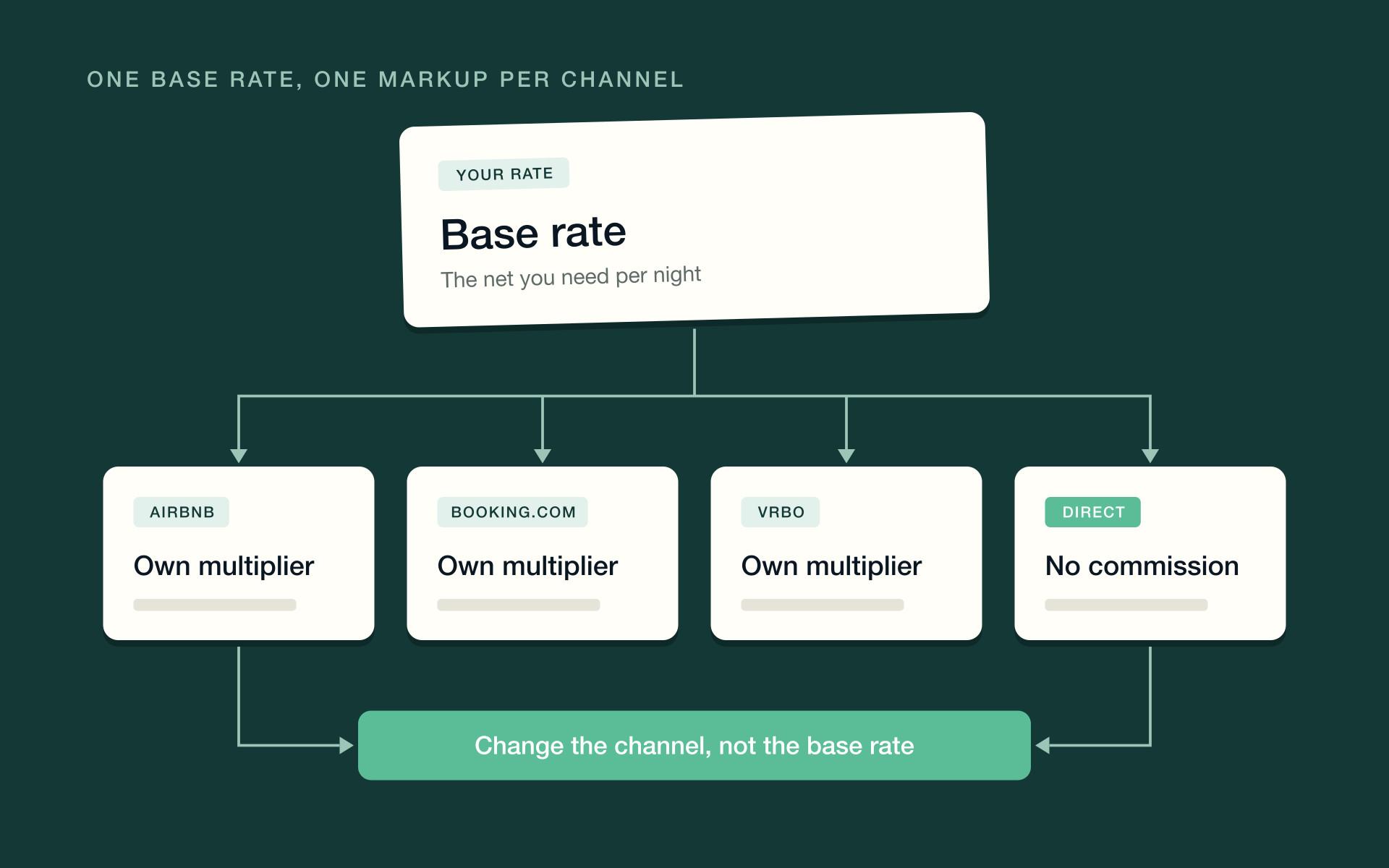
- Raising the base rate instead of the Airbnb rate. If your base rate feeds every channel, a 15% increase there also raises prices on your other channels and your direct booking site, which did not change their fees.
- Stacking a new markup on an old one. Many setups already carried a small Airbnb markup for the 3% host fee. Replace it. Do not add to it.
- Treating every reservation as the new rate. Bookings made before the switch keep the old fee, so for a while payouts arrive under both structures. A flat assumption in a spreadsheet will be wrong in both directions.
- Assuming every account matches. A portfolio spread across several Airbnb accounts can sit on different rates. Check a recent transaction on each.
How do Airbnb host fees compare with Vrbo and Booking.com?
The three channels in this comparison now charge in three different ways, so compare the structure before the number.
- Airbnb. One fee, paid by the host: 15.5% for most hosts, on the nightly price plus host-added fees. The guest sees no separate service fee.
- Vrbo. Its help center describes a pay-per-booking commission of 12% on the rental amount and the fees you charge travelers, with rates of up to 15% on some plans in some regions. Vrbo's own traveler service fee is separate from that commission.
- Booking.com. Commission is a set percentage of the total booking amount, including fees such as cleaning. Booking.com says the exact percentage depends on your country, property type and accommodation agreement.
The practical point is the same for all three. Each channel takes a different share from a different base, so one price pushed everywhere produces a different net on each. Price each channel from the net you need. And remember the channel that takes no commission at all: a booking on your own site.
What does the single fee change for property managers?
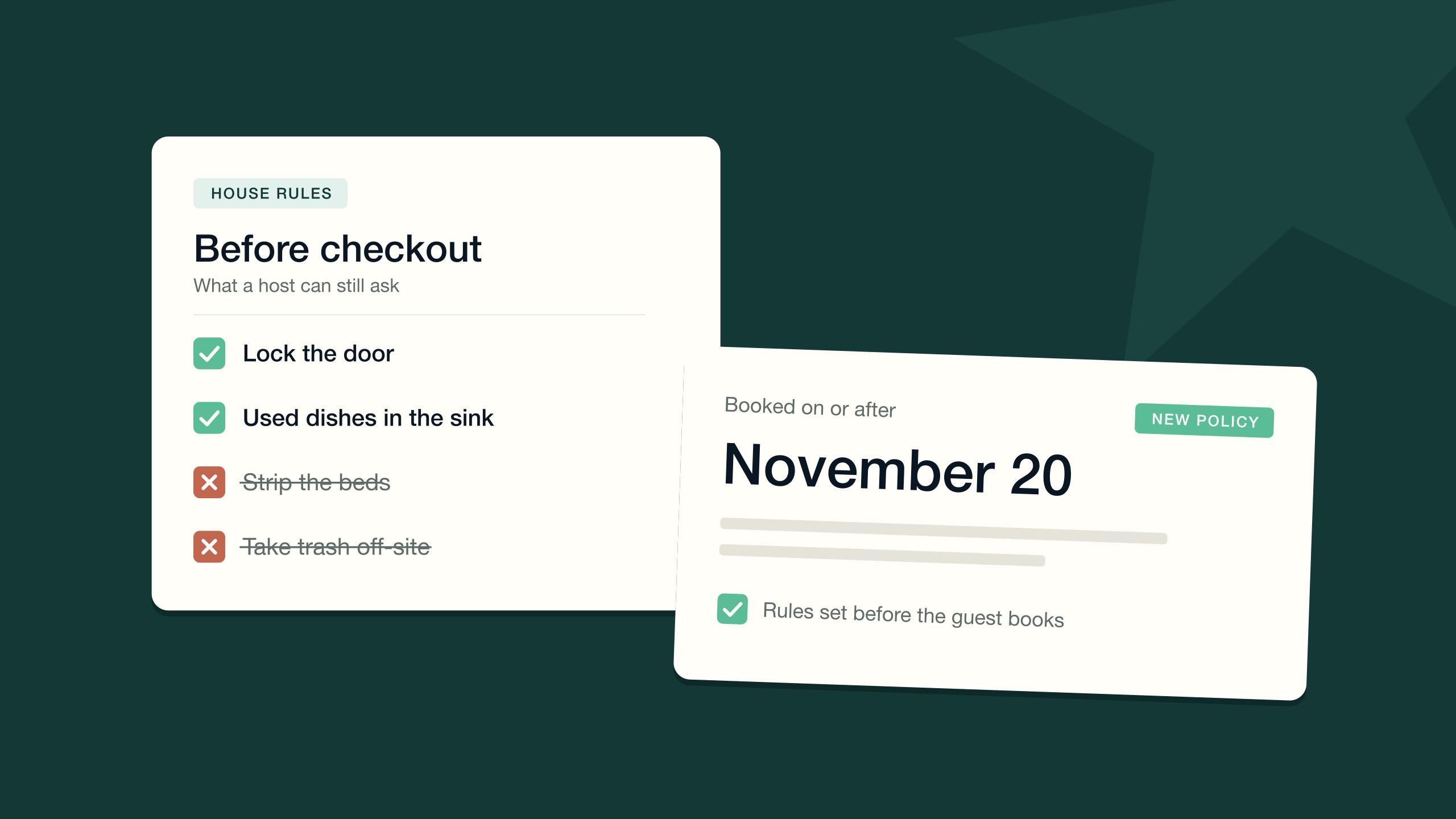
For a host with one listing, the story ends at repricing. For a manager, the fee change runs through to the owner. It is also the second platform change managers have had to absorb this season, after Airbnb's new house rules.
The fee line on owner statements is five times bigger
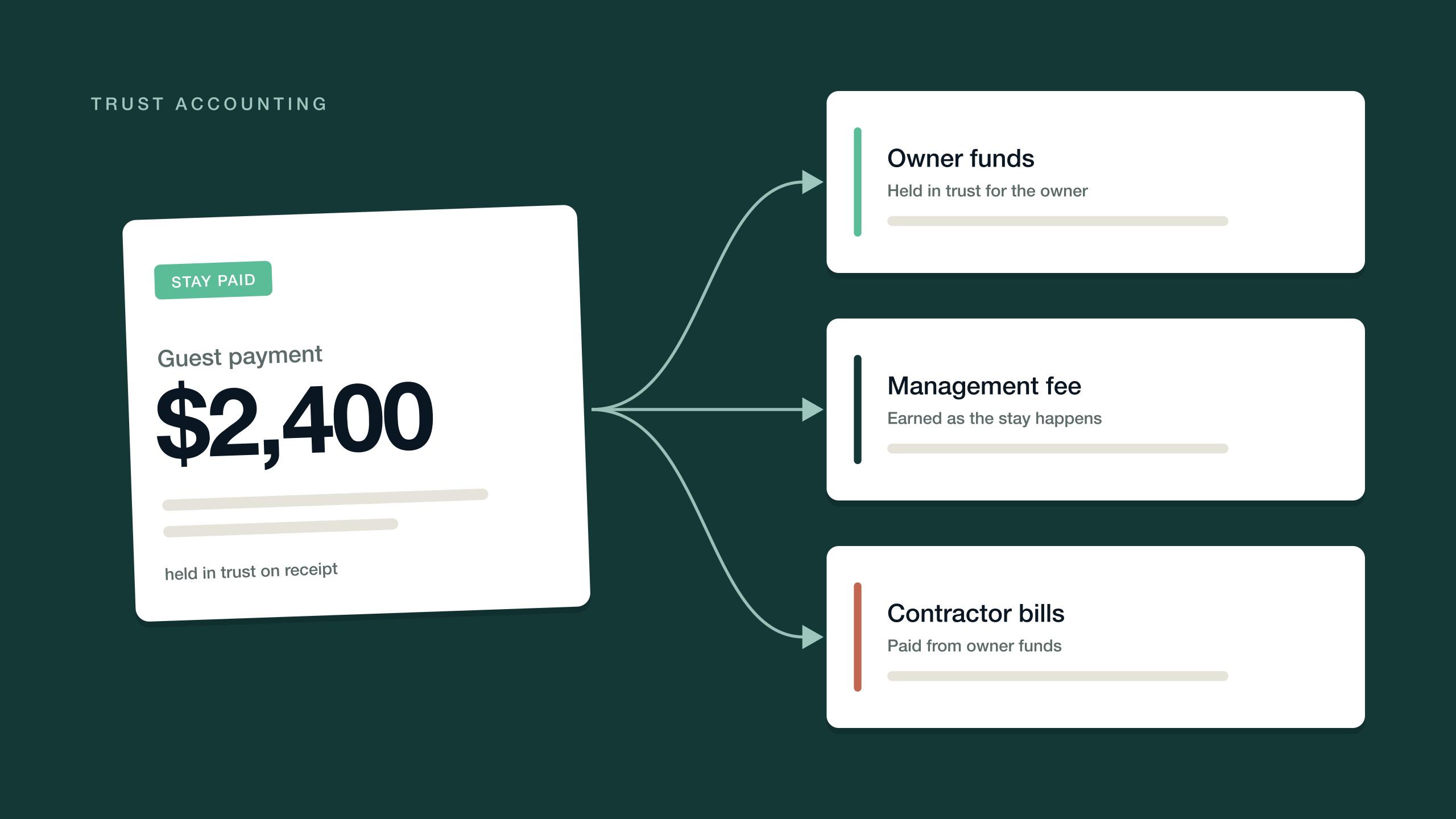
An owner who is used to seeing a 3% Airbnb fee will now see 15.5%. If you repriced correctly, their net is unchanged: booking revenue went up by about the same amount as the fee. But a statement shows the lines, not the logic. Revenue up, channel fees up sharply and payout flat is a pattern that prompts a phone call.
Get ahead of it. One short note with the next statement is enough: Airbnb moved its guest fee onto the host side, prices were raised to match, and the net per night is the same.
Check what your management commission is calculated on
This is the part worth an hour with your management agreements. If your commission is a percentage of what the owner receives after channel fees, nothing changes. If it is a percentage of gross booking revenue, the base just grew by about 15% — the uplift you added to cover Airbnb's fee — and your commission grew with it, paid out of the owner's unchanged net.
Neither basis is wrong. But an increase that happens because a platform moved a line item is not something an owner agreed to, and it is better raised by you than discovered by them. Decide whether to hold your commission to the old base, restate the basis, or explain the change. Then write down which you chose.
Your books carry two fee structures for a while
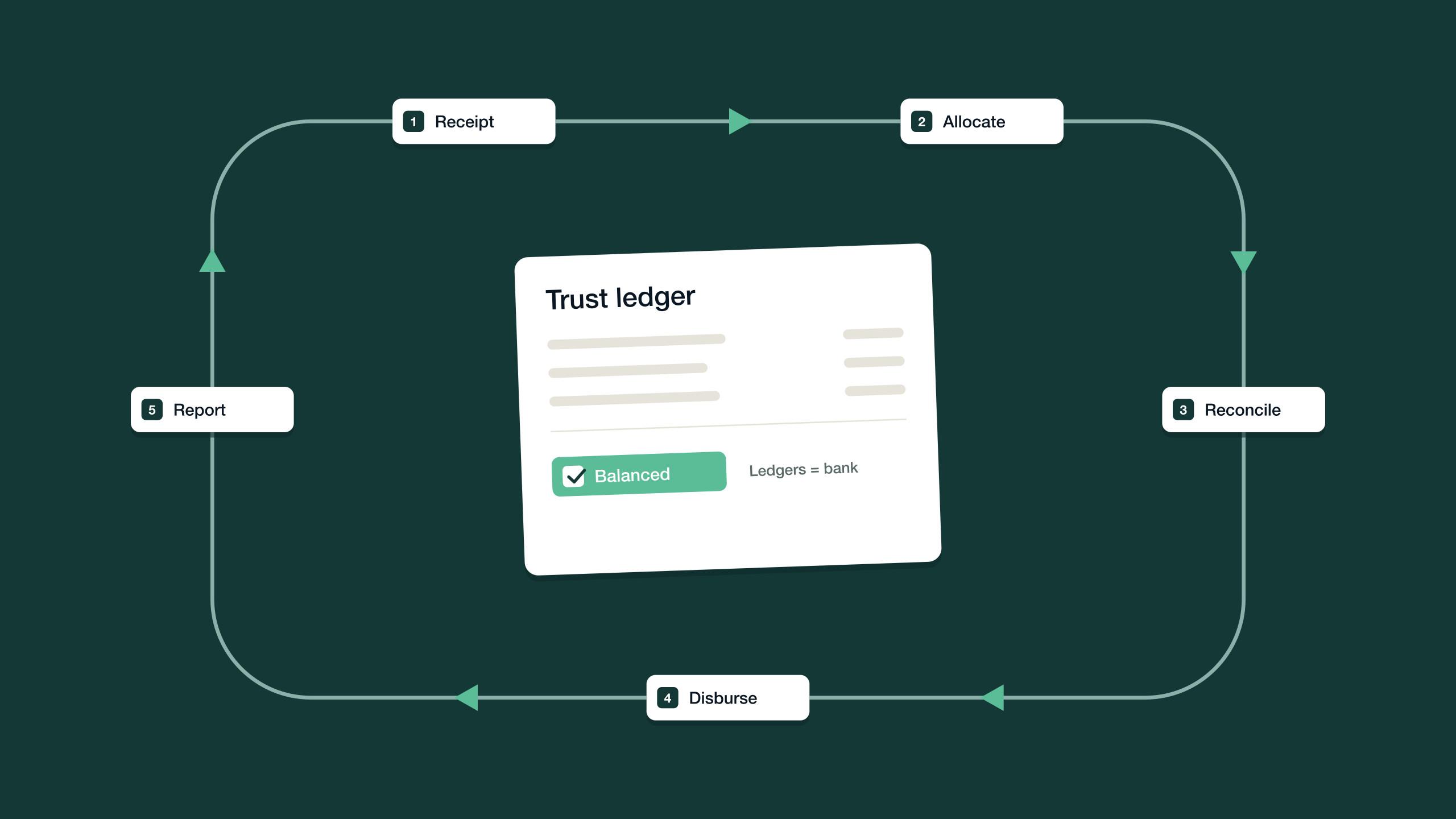
Because the single fee applies only to bookings made after the switch, payouts for stays booked earlier still arrive under the split fee. For a while, one payout can contain reservations on both structures. Reconcile at the reservation level — each stay's income, fee and net to its own owner ledger. It is the same discipline that sits at the center of trust accounting for property managers.
Taxes can move with the listed price
Airbnb's own guidance flags this. Where a value added or goods and services tax applies and you are registered for it, you may need to account for that tax yourself when you adjust prices. A higher gross income can also reach a registration threshold sooner, even when your net has not moved. Requirements vary by jurisdiction — confirm with your local regulator or a tax professional before you change how you account for it.
A six-step repricing checklist
Run this per Airbnb account, not per listing.
- Confirm the fee structure and rate. Open a recent transaction in your earnings and read the Airbnb service fee.
- Pick the target. The same payout as before, or a set net amount per night.
- Apply the multiplier on the Airbnb channel. Leave the base rate, your other channels and your direct site alone.
- Carry it through. Cleaning, pet and extra-guest fees, discounts, promotions and minimum prices.
- Check a real booking. Use Airbnb's price breakdown preview to see what the guest pays and what you earn, and compare it with the number you expected.
- Tell your owners. One note before the first statement that shows the new fee line.
Where does software help with Airbnb host fees?
Everything above can be done by hand for a handful of listings. Past that, the work is keeping a different markup on each channel and showing owners where the money went, without rebuilding a spreadsheet every time a platform changes its terms.
PropertyStack, an agentic property management platform for short-term rentals, handles the first part in its channel manager for vacation rentals: each channel carries its own commission rate settings — a commission percentage and a rate multiplier. That is the control this article keeps pointing to. Your own direct booking website for vacation rentals is commission-free, so the bookings you win there skip the question entirely.
The second part is visibility. The analytics Earnings view splits revenue into accommodation, cleaning, commission, charges and card surcharge, month by month, so the channel fee is a line you can see instead of a gap between gross and net. Owners check statements, payouts and performance themselves in the owner portal for property management, and an AI answers their questions there.
Software will not decide whether your commission should sit on gross or net. It will make sure that, once you have decided, every channel carries the right price and every statement tells the same story.
Frequently asked questions
The short version, for the questions operators ask most.
Under the single fee, most hosts pay 15.5% of the nightly price plus any host-added fees, deducted from the payout. Airbnb says remaining hosts typically pay 14% to 16%, and a higher rate applies to listings in a small number of countries. Under the older split fee, most hosts paid 3%.
With the split fee, the host paid about 3% and the guest paid a separate service fee of 14.1% to 16.5%. With the single fee, the whole fee comes out of the host's payout and the guest sees no separate service fee. Airbnb is phasing the split fee out.
To keep the payout you had under the 3% split fee, multiply your prices by about 1.148, a 14.8% increase. To net a specific amount after the fee, divide that amount by 0.845. Apply the same factor to cleaning and other host-added fees.
Yes. Airbnb calculates its service fee on the nightly price plus any fees the host adds, such as cleaning, pet or extra-guest fees. Taxes are excluded from the calculation.
No. Airbnb says the single fee applies only to new bookings made after an account switches. Reservations booked before the switch keep the old fee structure, even if the stay happens later. Once switched, an account cannot move back to the split fee.
Not if the host reprices to hold the same payout. In Airbnb's own example, a $100 price showed guests $115 under the split fee, and a $115 price shows guests $115 under the single fee. The guest sees one price, with no separate service fee line.
Still have questions?
Ask PropertyStackKeep reading

See it on your own listing. Free, from one link.
Paste an Airbnb listing and we'll show you what it could look like — a rewritten title, description, photos and a task list from your reviews.
- Syncs with every channel
- Cancel anytime
- AI agents with Pro