AI phone answering for vacation rentals: how it works
The 2 a.m. lockout call is the gap messaging automation never closed. Here's how an AI phone line answers it — and how to judge one before you switch it on.

Ryan J
Co-Founder, PropertyStack · · 11 min read
Contents
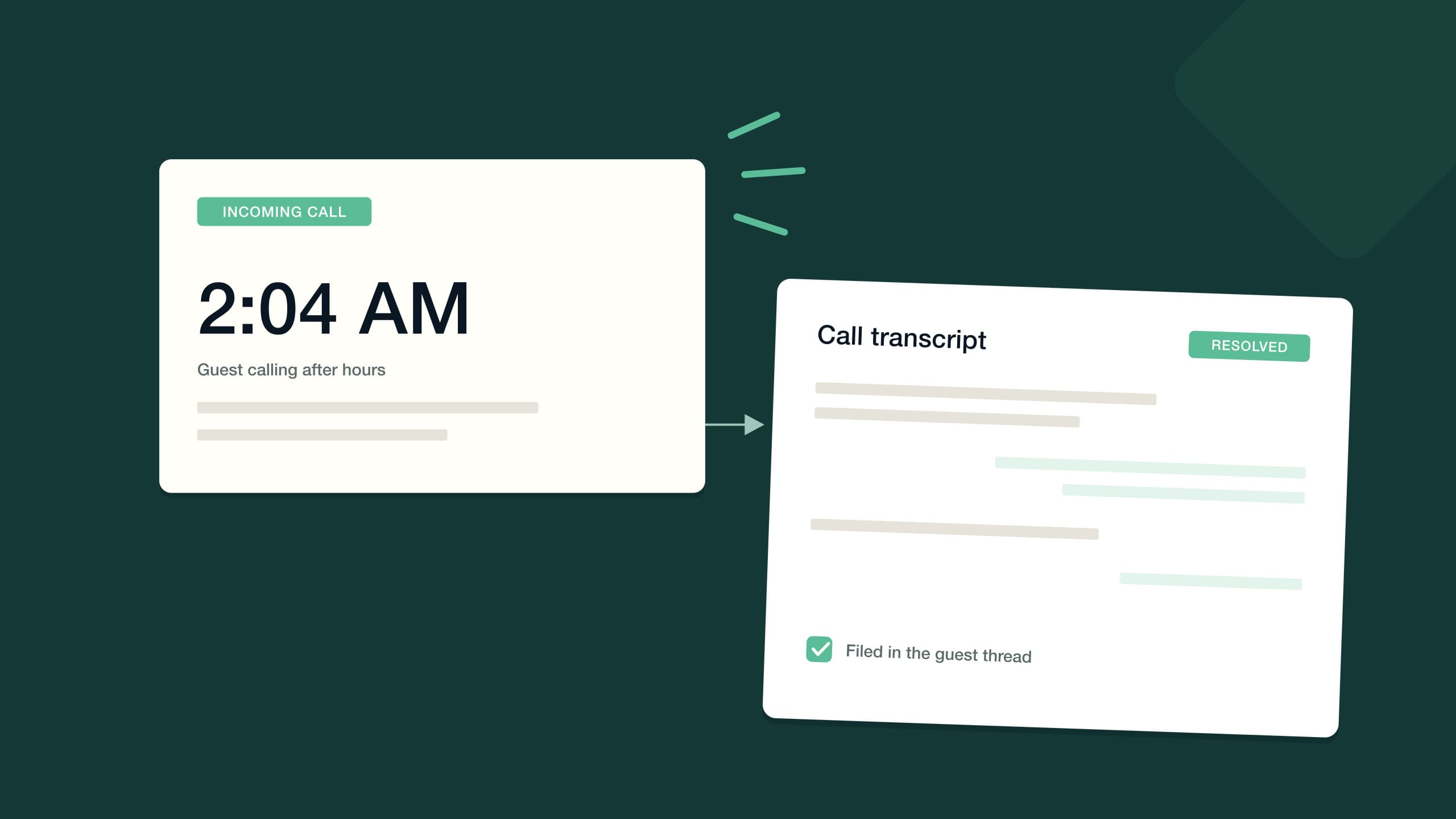
It's 2:04 a.m. and the phone is ringing. A guest is standing outside your property with two suitcases and a door code that isn't working. They messaged first — no answer, because your quiet hours are quiet. Now they've found the number on the listing, and this call ends one of two ways: someone picks up and gets them inside, or they spend the night rebooking a hotel and drafting the review you least want.
Most vacation rental operators have worked through the Airbnb automation playbook everywhere except the phone. Messages get templates, workflows and AI replies; calls still get a groggy on-call human, a voicemail box nobody checks, or a line that just rings out. AI phone answering closes that last gap — software that picks up guest calls around the clock, resolves the routine ones on the spot, and wakes a person only when a person is genuinely needed.
Why after-hours guest calls still happen in a messaging world
It's tempting to treat the phone as a legacy channel. Booking platforms push guests toward chat, your automations live in the inbox, and most routine questions arrive as messages anyway. But the calls that remain are concentrated in exactly the moments where a missed connection costs the most.
- Some guests simply prefer to call. Older travelers especially, but not only — plenty of people who happily book online still want to hear a voice when something matters to them. A listed number that rings out tells those guests the operation behind the listing is thin.
- Urgency produces calls, not messages. A guest wondering about checkout time sends a message. A guest standing in the rain with a dead lockbox calls. Stress moves people to the phone, so inbound calls skew toward the situations where a slow answer does the most damage.
- Mid-stay problems don't keep office hours. Lockouts, heating failures, tripped breakers, a neighbor's noise complaint — the operational middle of a stay generates issues in the evening and overnight, when nobody is at a desk and every escalation lands on you.
And not every call comes from a guest mid-stay. Prospective guests call to ask about accessibility, pets, parking or a quirky listing detail before they book — often outside your hours, often while comparing several properties at once. A missed call there isn't an inconvenience; it's a booking that quietly went to whoever picked up.
Good Airbnb message templates prevent most predictable questions from ever being asked. The phone is where the unpredictable ones land — and unpredictable is exactly what's hard to staff for. An overnight team is expensive at any portfolio size, and forwarding the line to your own cell means every 2 a.m. lockout is your 2 a.m. lockout.
What is AI phone answering for vacation rentals?
AI phone answering is a phone line answered by an AI agent instead of a person or a voicemail box. When a guest calls, the AI picks up, holds a spoken conversation, answers questions from your properties' actual information — check-in instructions, Wi-Fi details, parking, directions — and hands the call to a human when it reaches something it shouldn't decide alone. The call is recorded and transcribed, so a written record of what was said exists afterward.
You'll also see it described as a virtual receptionist for Airbnb hosts, or an AI answering service. The label matters less than two distinctions. First, this isn't an IVR — no "press 1 for check-in details" phone tree — it's a conversation. Second, it isn't a generic call center reading a script for a hundred businesses at once: a proper AI phone line answers as your operation, using your listings' details, and files each call into your systems like any other guest conversation.
It's not a replacement for people, either. The goal isn't zero humans on the phone — it's that a human only picks up when the call needs judgment, empathy or authority, instead of being woken for a Wi-Fi password.
How does 24/7 call answering work in property management?
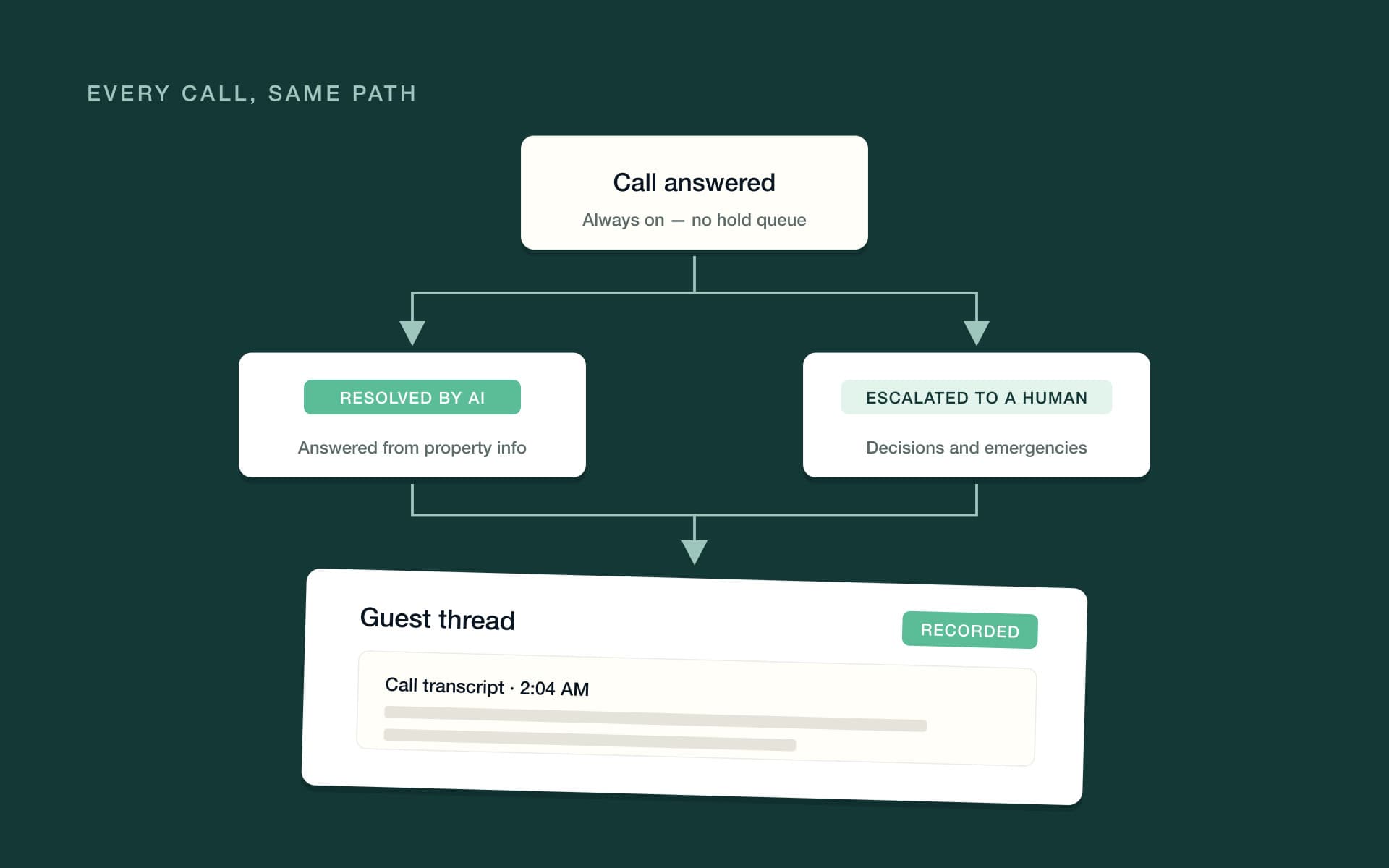
Under the hood, a well-built AI phone line runs every call through the same loop. From the guest's side it just feels like the phone being answered; from your side, it's a four-stage pipeline.
1. The call is answered
The line is always on. Whether it's a booking question at noon or a lockout at 2 a.m., the AI picks up and greets the caller — no hold queue to staff, no voicemail box to remember in the morning.
2. The AI works out what the guest needs
The agent listens for the intent behind the call: a question, a request, a problem. Where it can match the caller to an active reservation, the conversation gets specific — the checkout time for their stay, the parking situation at their building — rather than generic.
3. The call is resolved — or escalated
If the answer lives in the property's information, the AI gives it and the call ends there. If the guest asks for something that needs a decision — a refund, an exception, an emergency — the AI escalates to a human. Where that line sits should be your call, not the vendor's: escalation rules are guardrails you configure, not behavior you discover.
4. The call is recorded and transcribed
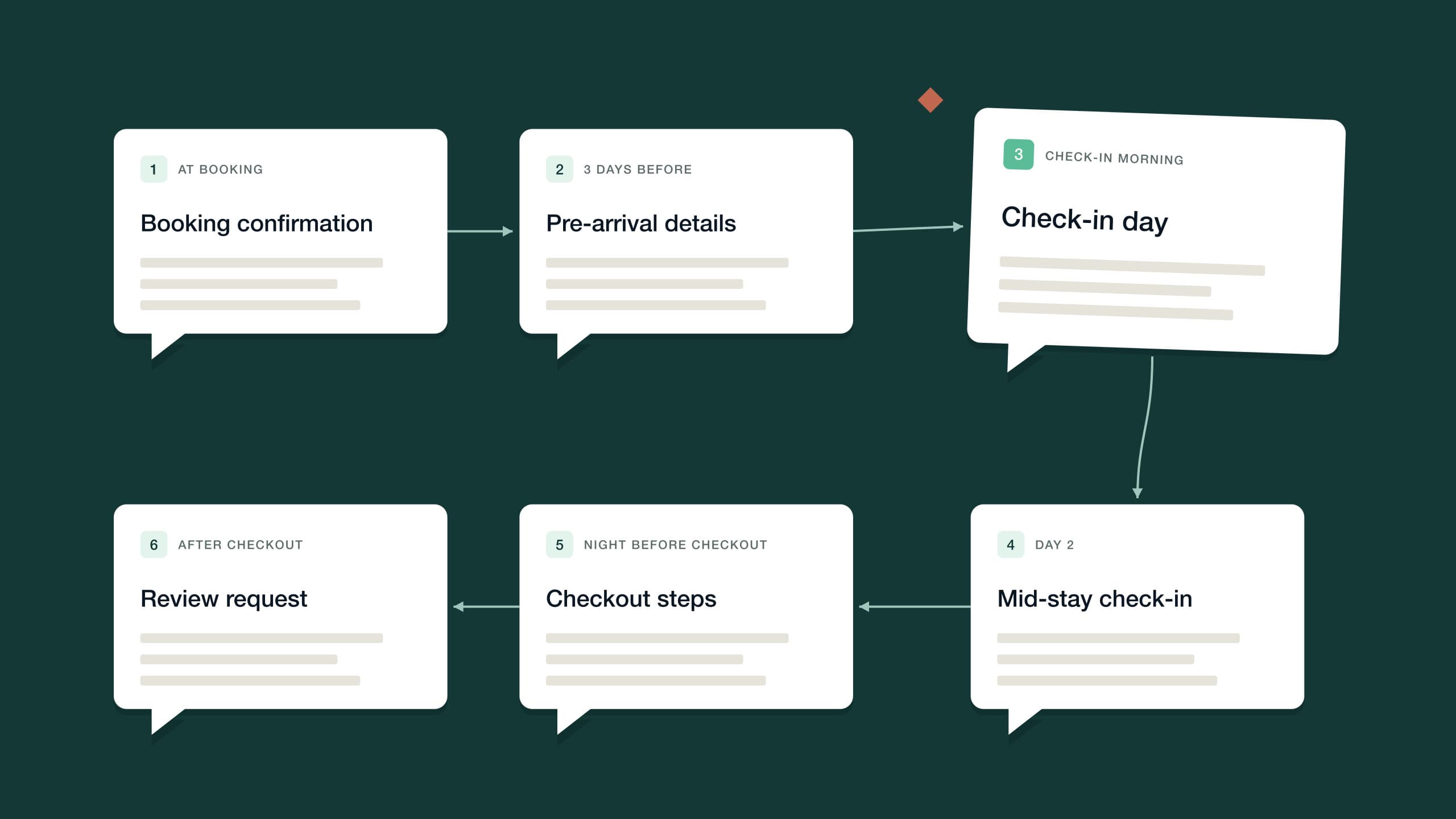
The recording and transcript are filed against the guest — ideally in the same thread as their messages, so the 2 a.m. call sits directly beneath the check-in email and above the follow-up the next morning. Nothing about the conversation lives only in a separate call log you'll forget to open.
What can an AI phone line handle — and what needs a human?
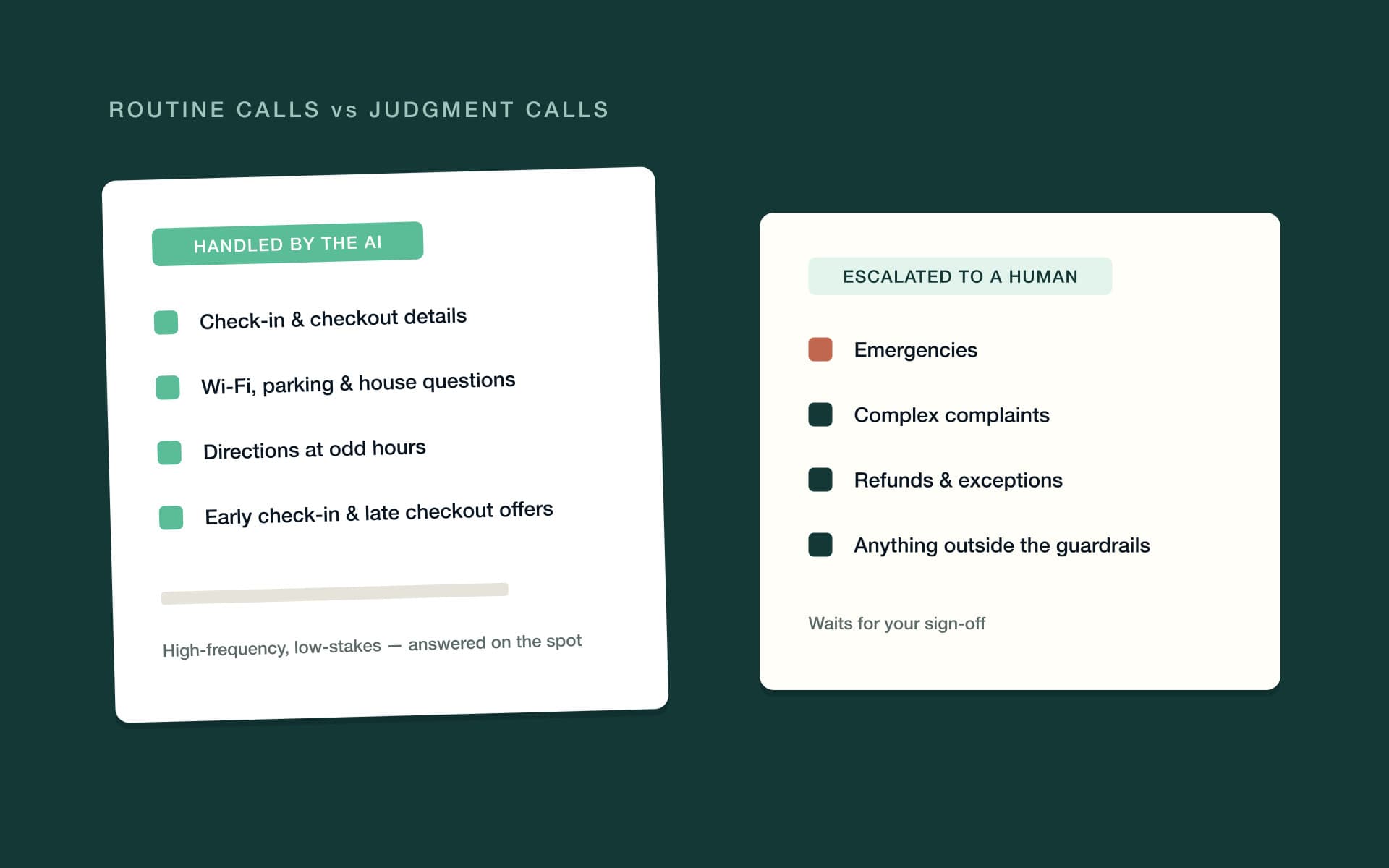
The honest pitch for AI phone answering isn't "it handles everything." It's that guest calls split into two piles — and the pile that burns out your team is the one a machine handles well.
Handled well by the AI
- Check-in and checkout details. Times, access instructions, which door, what floor — the questions your guidebook already answers, asked out loud instead.
- Wi-Fi, parking and house questions. The network name, where to park, how the thermostat works. High-frequency, low-stakes, answerable straight from listing information.
- Directions. A guest in an unfamiliar place at an odd hour, phone in hand — the classic call, and one that needs local facts, not judgment.
- Upsell requests. "Could we check in early?" is a revenue question phrased as a favor. An AI phone line can offer early check-in or late checkout on the call, turning a routine request into booking revenue.
Escalated to a human
- Emergencies. Anything touching safety — a gas smell, a break-in, a medical situation — goes straight to a person. The AI's job here is recognition and a clean handoff, not heroics.
- Complex or emotional complaints. A guest who feels wronged wants acknowledgment and authority. De-escalating an angry caller at midnight is human work, and pretending otherwise costs reviews.
- Money and exceptions. Refunds, compensation, bending a cancellation policy. These are approval decisions, and approval should sit with you.
- Anything outside the guardrails. The catch-all that makes the rest trustworthy: when a call doesn't clearly fit what the AI is allowed to do, the right behavior is to hand it off, not improvise.
That split shouldn't be hard-coded by a vendor. The pattern to look for is the one agentic platforms use: you set guardrails and approval thresholds — what the AI may resolve on its own, what it may offer, what waits for your sign-off — and it escalates to a human when something genuinely needs one.
A phone line you can trust with the routine is only trustworthy because it knows what not to touch. The escalation path is the feature, not the failure mode.
The transcript advantage: a searchable record of every call
Recording and transcription sound like fine print until the first time you need them. A phone call is the only guest interaction that traditionally evaporates the moment it ends — no thread, no timestamps, no record beyond what the person who took it remembers and whatever they typed into a note afterward.
Transcripts change that. The 2 a.m. call becomes text: searchable when a dispute surfaces three weeks later, reviewable when you want to know how calls are actually being handled, readable in one skim by the teammate picking up the conversation the next morning. "But the person on the phone told me..." stops being memory against memory.
Where the transcript lands matters as much as having one. Filed in a separate call-logging tool, it's better than nothing. Filed in the same unified inbox thread as the guest's messages, it's context: anyone who opens the guest sees the whole story in one scroll — the booking confirmation, the check-in message, the overnight call and the morning follow-up. Phone stops being a side channel and becomes part of the record.
What should you look for in an AI phone answering service?
Every demo of an AI phone line for short-term rentals will sound impressive — natural-sounding speech is table stakes now. The differences that matter are in the plumbing, and they're the things to press on before you switch one on.
- Same-thread continuity. Where does the call go when it ends? If the transcript lands in the same inbox thread as SMS, email and channel messages, phone becomes just another channel your team and your AI work together. If it lands in a separate portal, you've bought another silo.
- Language handling. Guests call in the language they speak. Look for a system that detects the guest's language and replies in it, rather than one that technically supports a list of languages you have to pre-select.
- Guardrails you control. You should decide what the AI resolves alone, what it can offer, and what escalates — with visible approval thresholds, not a black box tuned by someone else.
- A clear escalation path. When the AI hands a call off, where does it go, and how do you find out it happened? An escalation that disappears into a queue is a lockout call with extra steps.
- Upsell capability. Calls are a selling surface. A line that can offer early check-in or late checkout on the call — ideally the same AI upsells agent that works your guidebook, workflows and direct-booking site — turns a cost center into a revenue channel.
One more question worth asking: what happens to the rest of your phone setup? A line that exists apart from your property management platform means numbers, routing and call history living in a second system. A line that's part of the platform inherits the guest records, the automations and the team you already have — the call is just another conversation.
How PropertyStack's AI phone line works
PropertyStack, an agentic property management platform for short-term rentals, treats the phone as one guest channel among the rest, not a bolt-on. An always-on AI phone line answers calls 24/7, handles common guest questions, and can offer upsells like early check-in or late checkout. Calls are recorded and transcribed.
The line lives where the rest of the conversation lives. Guest messaging runs across SMS, WhatsApp, email and the AI phone line, all in one inbox — so a call transcript sits in the guest's thread beside their messages, and whoever opens the conversation next has the full picture.
Behind the line is the AI guest messaging agent — the communication agent that answers repetitive questions like check-in, Wi-Fi, parking and late checkout across every channel, manages mid-stay issues, and escalates to a human only when needed. It detects the guest's language and replies in it. And the boundaries stay yours: you set guardrails and approval thresholds, so you decide what runs automatically and what waits for your sign-off.
Frequently asked questions
The short version, for the questions operators ask most.
They solve the same problem — guest calls answered when you can't pick up. A traditional virtual receptionist is a human service taking messages from a script. AI phone answering is software that holds the conversation itself, resolves routine questions from your property information, and escalates calls that need a person.
It escalates to a human. A well-designed system lets you set the guardrails and approval thresholds — what the AI may resolve on its own and what waits for your sign-off — so emergencies, complaints and money decisions reach a person instead of getting an improvised answer.
On PropertyStack, calls to the AI phone line are recorded and transcribed, and the transcript is kept with the guest's conversation. That gives you a searchable record of what was said on every call — useful for disputes, handovers between teammates, and reviewing how calls are handled.
It should. PropertyStack's AI detects the guest's language and replies in it, across every channel. When you evaluate any phone answering service, test it in the languages your guests actually book in rather than trusting a supported-languages list.
Yes. PropertyStack's AI phone line can offer upsells like early check-in or late checkout when a guest calls to ask, and the sales and upsells agent makes the same offers across the guidebook, workflows and your direct-booking site — so a request that used to be a free favor becomes revenue.
Plans start at $50/month, and pricing scales with what you use — a platform base per property, plus the AI agents you switch on, plus a share of the new revenue the AI generates for you. Full details are on the pricing page.
Still have questions?
Ask PropertyStack

See it on your own listing. Free, from one link.
Paste an Airbnb listing and we'll show you what it could look like — a rewritten title, description, photos and a task list from your reviews.
- Syncs with every channel
- Cancel anytime
- AI agents with Pro